📖 5 min read
Selling your home is one of the biggest financial transactions you will ever make. Whether you’re upgrading, relocating, or investing elsewhere, proper preparation can significantly increase your final sale price. In today’s competitive real estate environment, buyers expect homes that are clean, modern, and move-in ready.
This comprehensive guide explains how to prepare your property for a profitable home sale, covering everything from repairs and staging to pricing strategy and marketing techniques.
Why Preparation Matters
A well-prepared home:
- Attracts more buyers
- Sells faster
- Receives stronger offers
- Reduces negotiation pressure
- Minimizes price reductions
In competitive markets like New York City, Los Angeles, or rapidly growing cities such as Austin, presentation and pricing strategy can make a substantial difference in your selling outcome.
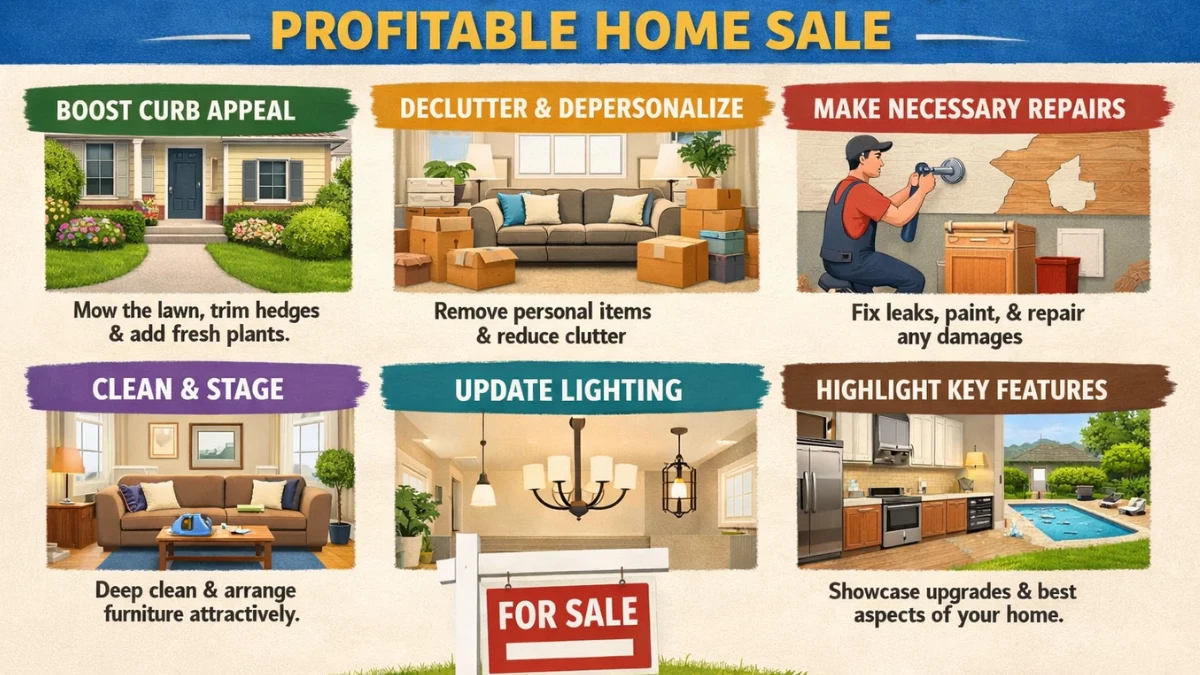
Step 1: Deep Clean and Declutter
First impressions strongly impact buyer decisions.
Decluttering Tips
- Remove personal photos and memorabilia
- Clear countertops and shelves
- Organize closets and storage areas
- Minimize furniture for spacious feel
Buyers want to imagine themselves living in the home, not feel like guests in someone else’s space.
Professional Cleaning
Consider hiring professional cleaners for:
- Carpets
- Windows
- Bathrooms
- Kitchen appliances
- Tile grout
A spotless property conveys care and maintenance.
Step 2: Complete Necessary Repairs
Small issues can create doubts in buyers’ minds.
Fix Minor Problems
- Leaky faucets
- Cracked tiles
- Peeling paint
- Loose handles
- Broken lights
Even minor defects may lead buyers to question the overall condition of the property.
Address Major Repairs
If your roof, plumbing, or electrical systems need attention, resolve them before listing. Alternatively, price accordingly and disclose transparently.
Step 3: Enhance Curb Appeal
The exterior sets the tone before buyers step inside.
Simple Exterior Improvements
- Fresh paint on the front door
- Trimmed landscaping
- Clean driveway
- Functional outdoor lighting
- Updated house numbers
Homes with strong curb appeal tend to receive more inquiries and higher offers.
Step 4: Upgrade Key Areas Strategicall
Not all renovations provide equal return on investment.
Kitchen Improvements
The kitchen often drives purchase decisions. Consider:
- Repainting cabinets
- Updating hardware
- Replacing outdated lighting
- Installing energy-efficient appliances
Bathroom Enhancements
- New faucets
- Modern mirrors
- Fresh caulking
- Neutral paint colors
Small cosmetic upgrades can dramatically increase perceived value.
Step 5: Stage Your Property Professionally
Staging highlights your home’s best features.
Benefits of Staging
- Makes rooms look larger
- Improves online photos
- Creates emotional connection
- Increases sale price potential
Neutral colors and minimal décor appeal to a broader audience.
Step 6: Price It Right from the Start
Accurate pricing is essential for profitability.
Comparative Market Analysis (CMA)
Compare recently sold properties in your area based on:
- Square footage
- Location
- Condition
- Amenities
Overpricing may discourage buyers and extend time on market.
Use Online Valuation Platforms
Websites like Zillow and Realtor.com offer estimated values. In India, platforms such as Magicbricks and 99acres help assess local pricing trends.
These tools provide guidance but should be supported by professional insight.
Step 7: Invest in Professional Marketing
Today’s buyers search online first.
High-Quality Photography
Professional photos increase listing views significantly. Include:
- Bright natural lighting
- Wide-angle shots
- Clean backgrounds
Video and Virtual Tours
Virtual walkthroughs allow remote buyers to explore your home, expanding your potential buyer pool.
Social Media Promotion
Targeted ads on platforms like Facebook and Instagram help reach buyers based on location and demographics.
Step 8: Highlight Modern Buyer Preferences
Buyers today value:
- Energy efficiency
- Smart home features
- Solar panels
- Home office spaces
- Open layouts
- Storage capacity
Emphasize these benefits clearly in your listing description.
Step 9: Prepare Legal and Financial Documents Early
Being organized builds buyer trust.
Important Documents
- Property title
- Tax receipts
- Utility bills
- HOA documents (if applicable)
- Renovation permits
Delays in documentation can postpone closing and reduce buyer confidence.
Step 10: Be Flexible and Ready for Showings
Accessibility increases your chances of selling faster.
- Offer weekend and evening showings
- Keep the home clean daily
- Vacate during property visits
The easier you make it for buyers, the quicker the sale.
Common Mistakes That Reduce Profit
- Overpricing emotionally
- Ignoring cosmetic repairs
- Using poor-quality listing photos
- Limiting showing availability
- Hiding property defects
Transparency and preparation protect your credibility.
Should You Hire a Real Estate Agent?
An experienced agent can:
- Price accurately
- Market effectively
- Negotiate strategically
- Manage paperwork
While selling independently can save commission, professional representation often results in a higher net profit.
How to Maximize Profit in a Competitive Market
If you’re in a strong seller’s market:
- Set a competitive price
- Create urgency
- Encourage multiple offers
- Review offers carefully
In slower markets:
- Offer incentives
- Improve staging
- Highlight unique features
- Consider minor upgrades
Adapting to market conditions improves profitability.
Conclusion
Preparing your property properly is the foundation of a profitable home sale. Cleanliness, repairs, staging, strategic pricing, and professional marketing all contribute to attracting serious buyers and strong offers.
By investing time and attention before listing your property, you position yourself for a faster sale and a higher return. A well-prepared home not only stands out in the market but also builds buyer confidence — leading to smoother negotiations and successful closing.
FAQs
1. How much should I spend preparing my home for sale?
Focus on high-impact, low-cost improvements like paint, repairs, and cleaning. Avoid expensive renovations unless ROI is clear.
2. Is staging necessary for profitability?
Yes, staging often increases buyer interest and may result in higher offers.
3. Should I repair everything before selling?
Address visible and functional issues. For major repairs, weigh cost vs. pricing adjustment.
4. How long should preparation take?
Preparation typically takes 2–6 weeks depending on the condition of the property.
5. Can I sell without an agent?
Yes, but professional guidance often increases final sale value and simplifies the process.