📖 6 min read
One of the biggest financial decisions homeowners face is whether to sell a property or rent it out. Both options can generate returns, but the right choice depends on market conditions, personal goals, cash flow needs, and long-term financial strategy.
In 2026, with evolving property markets, fluctuating interest rates, and rising rental demand in many regions, the debate between selling and renting is more relevant than ever. This guide breaks down the financial, practical, and strategic factors to help you decide which option offers better returns for your situation.
Understanding the Core Difference
Before comparing returns, it’s important to understand how each option works financially.
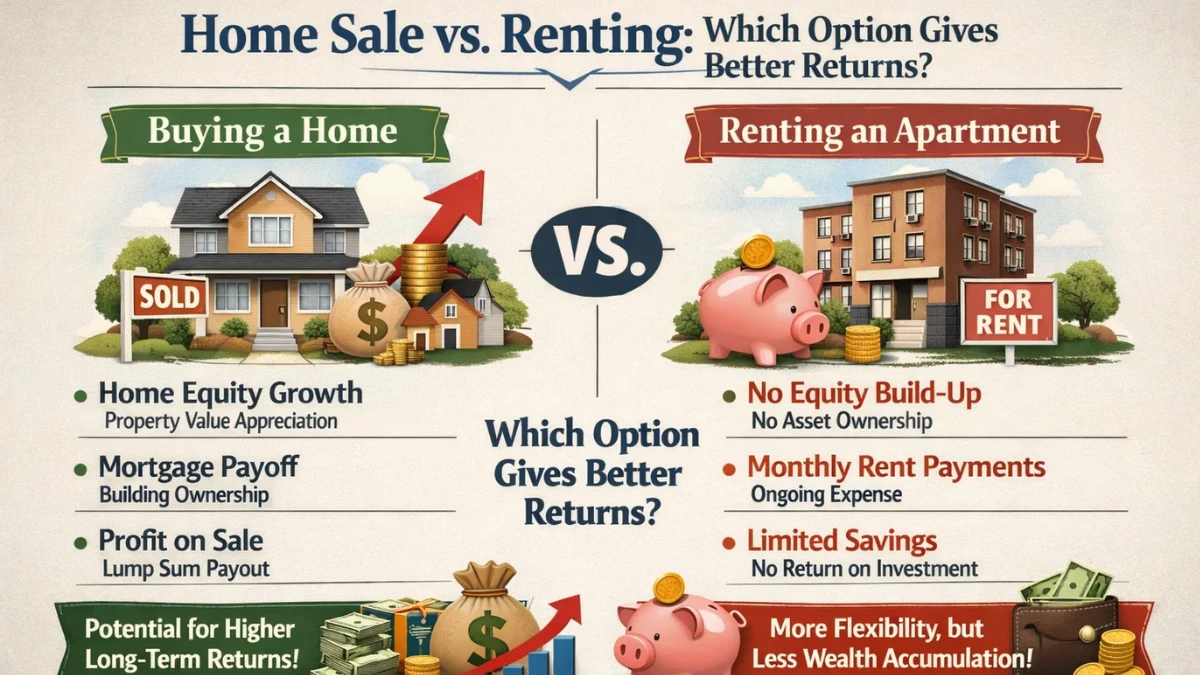
Home Sale
Selling your home gives you:
- Immediate lump-sum cash
- Freedom from property-related expenses
- Opportunity to reinvest capital elsewhere
However, once sold, you no longer benefit from future property appreciation.
Renting Out the Property
Renting allows you to:
- Generate monthly income
- Retain ownership
- Benefit from long-term appreciation
But it also requires ongoing management, maintenance, and tenant oversight.
Financial Comparison: Selling vs. Renting
1. Immediate Cash vs. Long-Term Income
Selling Advantages:
- Instant liquidity
- No ongoing risk tied to property market
- Funds available for new investments (stocks, business, other real estate)
Renting Advantages:
- Recurring passive income
- Potential property appreciation
- Tax benefits in many cases
If you need immediate funds, selling may offer better short-term returns. If you can wait, renting often generates stronger long-term wealth.
2. Property Appreciation Potential
Real estate generally appreciates over time, especially in growing cities and high-demand areas.
- If your property is in a rapidly developing area, renting while holding may produce greater long-term gains.
- If your market has peaked or is slowing, selling now could maximize profits.
Timing plays a major role in determining better returns.
3. Rental Yield Calculation
To determine if renting is profitable, calculate:
Rental Yield (%) = (Annual Rental Income ÷ Property Value) × 100
For example:
- Property value: ₹1 crore
- Annual rent: ₹4 lakh
- Rental yield: 4%
Compare this return with other investment options. If you can earn higher returns elsewhere, selling may be smarter.
Expenses to Consider
Costs of Selling
- Real estate agent commission
- Legal fees
- Capital gains tax
- Marketing costs
- Minor renovation/staging expenses
Selling provides net profit only after deducting these expenses.
Costs of Renting
- Property maintenance
- Repairs
- Property tax
- Insurance
- Tenant turnover costs
- Property management fees (if outsourced)
- Potential vacancy periods
Rental income isn’t pure profit — expenses reduce actual returns.
Tax Implications
Selling
You may face:
- Capital gains tax (short-term or long-term)
- Tax deductions if reinvesting in another property (depending on local laws)
Renting
You may benefit from:
- Depreciation deductions
- Maintenance expense deductions
- Mortgage interest deductions
Consulting a tax professional is highly recommended before deciding.
Market Conditions Matter
Strong Seller’s Market
If:
- Property prices are rising rapidly
- Demand exceeds supply
- Multiple offers are common
Selling may generate exceptional returns.
Strong Rental Market
If:
- Rental demand is high
- Vacancy rates are low
- Rental prices are increasing
Holding and renting can be more profitable.
Understanding your local real estate cycle is crucial.
Risk Comparison
Risks of Selling
- Missing future appreciation
- Reinvesting money poorly
- Emotional regret
Risks of Renting
- Problematic tenants
- Property damage
- Long vacancy periods
- Legal complications
- Market downturn reducing rental demand
Renting generally involves more ongoing risk and management effort.
Lifestyle Considerations
Financial returns aren’t the only factor.
Selling May Be Better If:
- You’re relocating permanently
- You don’t want landlord responsibilities
- You need liquidity
- You prefer simpler finances
Renting May Be Better If:
- You plan to return to the property
- You want passive income
- You’re building a real estate portfolio
- You believe property values will rise
Personal goals heavily influence the right choice.
Investment Comparison Example
Let’s compare two scenarios:
Scenario 1: Selling
- Sale price: ₹1 crore
- Net after expenses: ₹95 lakh
- Invested at 8% annual return
- Potential return after 10 years: ~₹2.05 crore
Scenario 2: Renting
- Rental income: ₹4 lakh/year
- 5% annual property appreciation
- After 10 years:
- Rental income total: ₹40 lakh (before expenses)
- Property value: ~₹1.63 crore
In this simplified example, renting + appreciation may generate higher overall wealth — but only if rental income remains stable and maintenance costs are controlled.
Emotional and Opportunity Factors
Emotional Value
Some homeowners keep properties for sentimental reasons or future family use. Selling eliminates that option.
Opportunity Cost
If selling allows you to:
- Start a business
- Pay off high-interest debt
- Invest in higher-yield assets
Then selling might produce better overall financial growth.
Hybrid Strategy: Rent Now, Sell Later
Some homeowners choose to:
- Rent for a few years
- Wait for market appreciation
- Sell when prices peak
This approach allows income generation while monitoring market trends.
However, timing the market perfectly is difficult.
Key Questions to Ask Before Deciding
- What is my property’s current market value?
- What rental income can I realistically expect?
- How strong is local market demand?
- Do I need immediate cash?
- Am I prepared to manage tenants?
- What are current interest and investment rates?
- How long do I plan to hold this asset?
Answering these helps clarify the better return option.
When Selling Typically Gives Better Returns
- Property values are at historical highs
- Rental yields are low (below 3%)
- You have better investment alternatives
- The property requires major repairs
- You need liquidity urgently
When Renting Typically Gives Better Returns
- Strong rental demand in your area
- Property located in growing city
- You can manage tenants efficiently
- Long-term appreciation outlook is positive
- Mortgage is mostly paid off
Final Verdict: Which Option Wins in 2026?
There is no universal answer.
- Short-term profit seekers may prefer selling.
- Long-term wealth builders often benefit more from renting.
- Risk-averse individuals may choose selling.
- Passive income investors lean toward renting.
The best choice depends on your financial goals, risk tolerance, local market conditions, and lifestyle preferences.
Conclusion
The debate between home sale vs. renting ultimately comes down to strategy. Selling provides immediate capital and simplicity. Renting offers long-term income and appreciation potential. Carefully calculate rental yield, expenses, market conditions, and opportunity cost before deciding.
Smart homeowners analyze numbers — not emotions — when determining which option gives better returns.
FAQs
1. Is renting always more profitable than selling?
Not necessarily. It depends on rental yield, appreciation rate, and maintenance costs.
2. How do I calculate if renting is worth it?
Calculate annual rental income minus expenses, then compare with potential investment returns from selling.
3. Does market timing matter?
Yes. Selling during peak prices or renting during high demand can significantly impact returns.
4. What if I don’t want landlord responsibilities?
Selling may be better if you prefer less stress and management.
5. Can I rent temporarily and sell later?
Yes, many investors use this hybrid strategy to maximize appreciation before exiting.